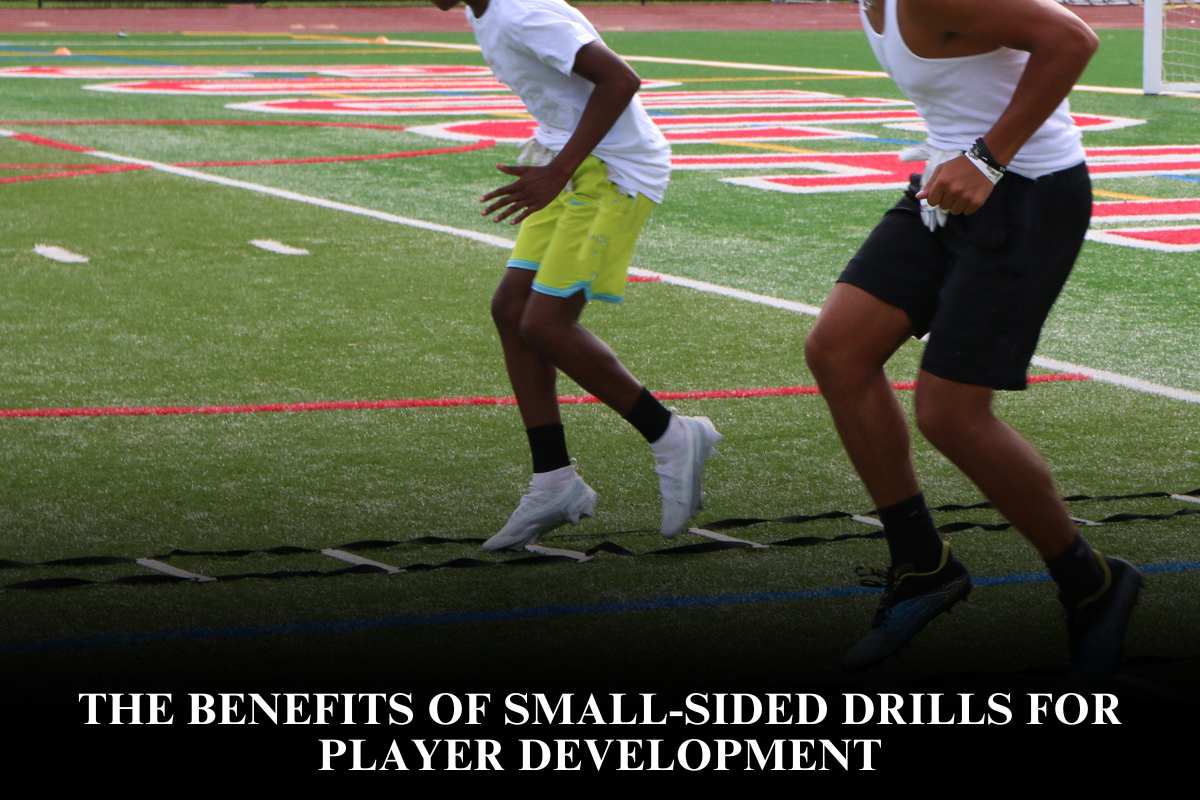
Small-sided drills, also known as small-sided games (SSGs), involve fewer players on smaller fields and form a cornerstone of youth soccer development in the United States. According to U.S. Youth Soccer and U.S. Soccer Federation guidelines, these formats—such as 3v3 for U6 or 4v4 for U8—maximize touches, decisions, and engagement for young athletes.
They outperform traditional 11v11 games by providing age-appropriate challenges that accelerate technical, tactical, physical, and psychological growth.
Technical Skill Gains

Small-sided drills dramatically increase ball touches, with studies showing U10 players averaging 4.3 touches per minute in 4v4 versus just 0.37 in 11v11. This repetition hones dribbling, passing, receiving, shooting, and 1v1 defending, as players face constant pressure in tight spaces.
US Youth Soccer data from Manchester United analysis reveals 135% more passes, 225% more 1v1s, 260% more shots, and 500% more goals in 4v4 compared to 8v8, building precise individual techniques like first touch and ball control.
Coaches observe faster technical proficiency because every player participates actively, eliminating downtime where kids stand idle in larger games. Goalkeepers benefit too, making 2-4 times more saves due to heightened action. These gains align with U.S. Soccer’s player pathway, mandating SSGs for under-12s since 2017 to prioritize skill over athleticism.
Tactical Awareness Boost

In SSGs, reduced numbers force players to define team shape, scan for space, and execute group defending or attacking principles. Transitions between offense and defense happen more frequently, mirroring real-game demands while simplifying decisions—fewer options mean quicker thinking under pressure. U.S. programs like those from Rise FC emphasize how this builds soccer intelligence: reading opponents, finding passing lanes, and coordinating movements.
USSF-backed research shows 260% more decision opportunities in small formats, fostering spatial awareness and problem-solving that transfers to full-sided play. Coaches use SSGs for targeted tactics, like defensive marking or attacking combinations, with immediate feedback in small groups. This approach, endorsed by US Youth Soccer, creates a “stair-step” progression to 11v11.
Physical Fitness Edge
SSGs elevate heart rates 15-20% higher than drills, promoting aerobic/anaerobic conditioning through constant sprints, direction changes, and high-energy involvement. Fields scaled to age—25×20 yards for U6, 35×25 for U8—ensure quality movements tied to ball, teammates, and foes, preventing fatigue from oversized pitches. Recent studies on U.S. youth confirm superior sprint (10m/30m), agility (Illinois test), and maximum aerobic speed gains versus circuit training.

Players rotate positions naturally, building versatile fitness without isolation drills. US Youth Soccer notes more playing time enhances stamina and reduces injury risk by matching physical demands to developmental stages. High-intensity play keeps everyone moving, unlike 11v11 where ball possession averages just 1.5-2 minutes per player.
Psychological Benefits
Fun drives retention, and SSGs deliver: goals every 2 minutes in 4v4 versus longer waits in 11v11, boosting self-esteem through scoring and saves. Game-based training keeps kids engaged—no lines or lectures—with competition fostering resilience and teamwork. U.S. coaches report higher enjoyment and adherence, as seen in studies where SSG groups scored better on PACES scales than alternatives.
Parents and players appreciate maximum participation; no benchwarmers in small rosters (e.g., 6-player U8 teams). USWNT coaches like Pia Sundhage stress early SSGs build habits impossible to instill later, prioritizing technique and mindset over size/speed. This psychological edge supports long-term development, aligning with America’s shift from athleticism reliance.
US Soccer Guidelines
U.S. Soccer mandates SSGs: U6 (3v3, 25×20 yards, no GK), U8 (4v4, 35×25), U10 (6v6 or 7v7 variants), up to U12 (8v8 or 9v9). No offsides, indirect frees, and 5-yard opponent distance simplify rules for focus on fun and skills. US Youth Soccer’s manual promotes dual-field or single-field setups for more games, ensuring all play.
Facilities gain ROI from compact fields boosting touches 135% and parent satisfaction. Adopted post-2017 revolution, these standards draw from global models (Spain, England) but tailor to American pathways.
Implementation Tips
Start sessions with 4v4 possession games, progressing to scored variants with conditions (e.g., 2-touch limits). Coaches maximize feedback in groups under 10; vary formats for defense/attack focus. Track progress via touches or decisions per minute, integrating into 60-minute practices.
Parents support by cheering effort over wins; facilities build small pitches per USSF specs. Combine with warm-ups for holistic sessions, as Liverpool legends like John Barnes did daily.
FAQs
Q. What ages benefit most from small-sided drills in U.S. soccer?
US Youth Soccer recommends SSGs for U6-U12, with formats like 3v3 to 9v9 building to 11v11 by U14. This ensures age-appropriate fields and rules.
Q. How many more touches do players get in 4v4 versus 11v11?
U10 boys average 4.3 touches/minute in 4v4 (260 total in 60 minutes) versus 0.37/minute (22 in 48 minutes) in 11v11, per US Youth Soccer studies.
Q. Do small-sided games improve fitness more than traditional drills?
Yes, they raise heart rates 15-20% higher, enhancing sprints, agility, and endurance via constant involvement, outperforming circuits in U.S. youth research.
Q. Why did U.S. Soccer mandate small-sided games in 2017?
To prioritize technical/tactical growth over athleticism, increasing touches/decisions/goals and aligning with global best practices for youth pathways.
Q. Can small-sided drills help with decision-making under pressure?
Absolutely—260% more opportunities force quick choices on pass/dribble/shoot, building soccer IQ in game-like scenarios, per USSF-endorsed data.