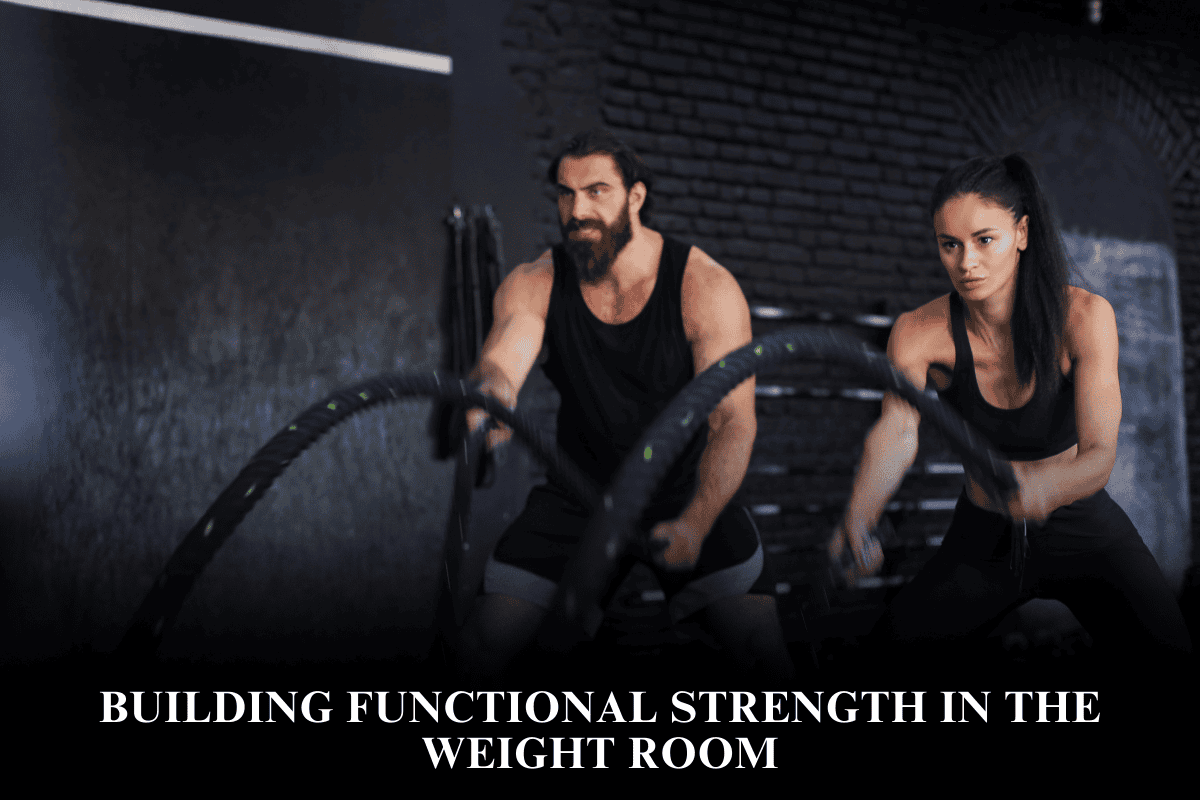
Building functional strength in the weight room means training movements, not just muscles, so that your body is stronger and more capable in everyday life, work, and sport. It focuses on multi‑joint exercises, core stability, and coordination across different planes of motion rather than isolated machines alone.
What Is Functional Strength?
Functional strength training uses exercises that look and feel similar to real‑life tasks like squatting, lifting, pushing, pulling, and rotating. These movements engage multiple joints and muscle groups at once, improving balance, stability, and control while building strength.
Instead of focusing only on one muscle at a time, functional sessions emphasize integrated patterns such as squats, hinges, lunges, pushes, pulls, and carries. This style of training can reduce injury risk and make daily activities like climbing stairs, carrying groceries, or playing sports feel easier.
Key Training Principles
Successful functional strength programs follow core strength‑training principles such as overload, specificity, and progression. Overload means gradually increasing weight, volume, or complexity so the body continues to adapt, while specificity ensures exercises match the movements and demands you care about most.
Progression can involve heavier loads, more challenging variations (for example, moving from bilateral to single‑leg work), or adding instability and rotation. Individual needs and recovery also matter, so rest days, sleep, and appropriate volume are essential for long‑term progress.
Best Functional Weight‑Room Exercises

In the weight room, compound lifts are the foundation of functional strength. Examples include squats, deadlifts, lunges, overhead presses, rows, and loaded carries, all of which train large muscle groups through natural movement patterns. Many coaches also include kettlebell swings, Turkish get‑ups, and anti‑rotation core drills to build power, stability, and body control.
A balanced session usually trains all major “pillars” of movement: level changes (squats, hinges), pushing, pulling, locomotion, and rotation. Using free weights like barbells, dumbbells, and kettlebells often provides more functional benefit than fixed machines because they demand more stabilization and coordination.
Sets, Reps, and Weekly Structure
For functional strength, moderate to heavy loads with lower to moderate reps work well, such as 3–5 sets of 3–8 reps on big lifts. Heavier sets of 1–6 reps emphasize maximal strength, while 6–12 reps help build “functional muscle” that supports both performance and size.

Most people do well with two to four total‑body or upper/lower sessions per week that include both strength work and some conditioning. Conditioning elements like sled pushes, circuits, or loaded carries can raise heart rate and work capacity while still feeling very functional.
Sample Functional Session (Outline)
A typical functional strength workout might start with a dynamic warm‑up and activation drills, then move into two or three heavy compound lifts. After that, accessory circuits can target single‑leg strength, core stability, and rotational control, finishing with carries or short conditioning intervals.
Across a training block, small changes in exercise selection, tempo, and loading help maintain progress without overwhelming the body. Tracking weights, reps, and perceived effort helps ensure overload while keeping form and movement quality as the main priority.
FAQs
How many days per week should I train for functional strength?
Most lifters make good progress with two to four functional strength sessions per week, allowing at least one rest or light day between hard workouts for recovery.
What rep range is best for functional strength?
Low to moderate rep ranges of about 3–8 reps with relatively heavy loads tend to be effective for building functional strength and neural efficiency.
Do I need machines for functional training?
No. Free weights and bodyweight movements are usually enough, and often better, because they require stabilization and coordination similar to real‑world tasks.
Can beginners do functional strength training?
Yes, beginners can start with simpler bodyweight and light free‑weight variations, focusing on technique and gradually adding load and complexity over time.
Is functional strength the same as CrossFit or HIIT?
Not exactly. Functional strength can appear in CrossFit or HIIT workouts, but the concept itself is broader and focuses on movement quality and strength rather than a specific brand or style.