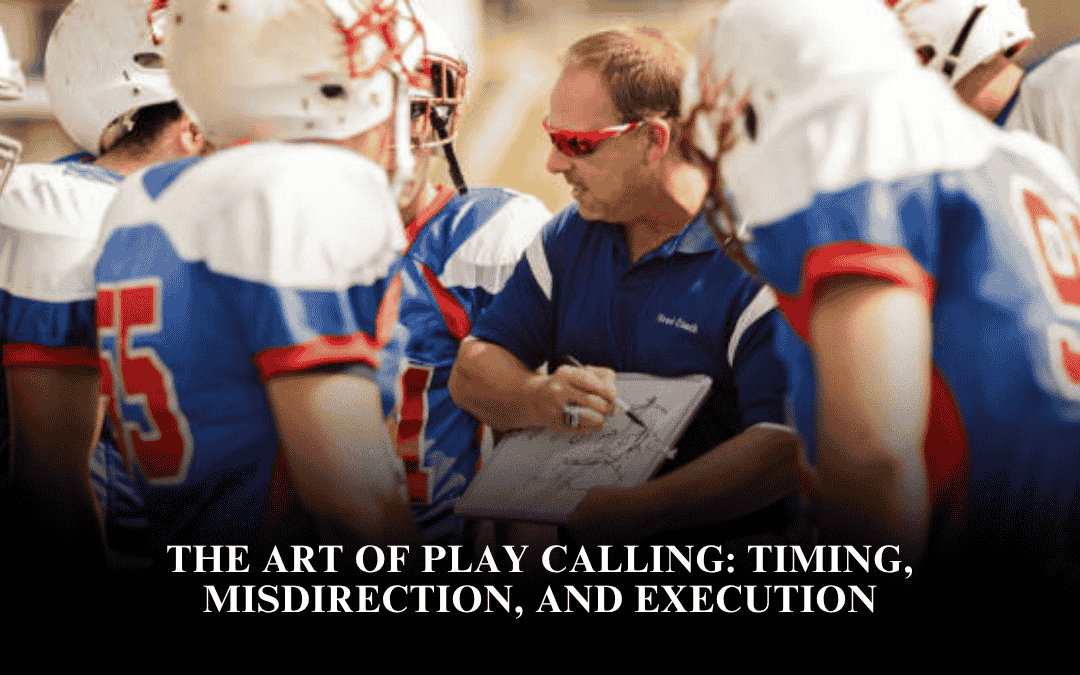
In the grand theater of American football, a play call is far more than a command—it’s a test of timing, rhythm, and instinct. From the echoing cheers of Chicago’s Soldier Field to the quiet intensity of a Friday night in Austin, Texas, timing defines the difference between control and chaos.
A perfectly timed play can exploit defensive confusion, seize momentum, and turn opportunity into victory. According to league data, teams inside the opponent’s 20-yard line convert nearly 60% of the time when they run plays within 10 seconds of the huddle breaking.

Waiting too long, however, allows the defense to reset, crowd noise to swell, and adrenaline to dip—often killing the drive before it starts.
In major markets like New York or Los Angeles, where distractions are constant and energy is high, disciplined timing becomes an art form. Quick snaps, tempo shifts, and well-practiced no-huddle sequences keep defenders in reactive mode.
On the flip side, penalties for delay of game, illegal motion, or a sluggish cadence can turn opportunity into frustration. For great teams, timing isn’t just about seconds—it’s about rhythm, the invisible beat that keeps the offense in sync.
Misdirection: A Hidden Weapon

Misdirection is where football meets illusion. It’s the art of convincing the defense they’ve solved your puzzle—right before revealing a different picture. A quarterback fakes a handoff, rolls out, and hits a receiver streaking across the opposite side.
Linebackers bite, safeties hesitate, and just like that, a gap opens where none seemed to exist.
Across college stadiums from Seattle’s Husky Stadium to Miami’s Hard Rock Stadium, teams that effectively use misdirection—via jet sweeps, reverses, and double-fake handoffs—have seen their average yards per play rise from 5.2 to 6.1. Over 60 plays, that’s a game-breaking difference.

For defensive coordinators, facing a team that thrives on deception creates constant tension. If Denver’s defense knows your offense thrives on fakes, its safeties and corners play cautiously—opening deep routes and loosening coverage.
Smart coaches treat misdirection as more than a gimmick; it’s a philosophy. It manipulates defenders’ instincts, challenges discipline, and forces hesitation—the most dangerous thing a defender can feel.
Execution: Bringing the Plan to Life
Even the most ingenious strategy is worthless without flawless execution. The best play designs demand precise timing, unbreakable fundamentals, and sharp mental focus. Every snap, block, and read must align in perfect synchrony.
Imagine this: it’s third-and-five in Atlanta. You call a beautifully crafted play-action bootleg. The defense bites. The receiver is open. But the left tackle misses his block, the quarterback hesitates, and the pass falls incomplete. The plan was perfect; the execution failed.
The top ten offenses in the NFL average fewer than two sacks and three penalties per game, a sign of consistency and discipline. Clean execution eliminates self-inflicted errors and sustains drives. In football—as in life—the best strategies succeed only when everyone executes their role with precision and purpose.
Bringing It All Together
The true art of play calling lies in merging timing, misdirection, and execution into one fluid sequence. It’s not enough to draw up the perfect play; success depends on when it’s called, how it’s disguised, and how well it’s performed.
A coach in Houston might emphasize relentless tempo to wear down opponents. In Minneapolis, another might use icy turf to slow defenders and set up misdirection sweeps.
Across every level—from high school sidelines in Texas to professional locker rooms in Los Angeles—the same principles endure: strike at the right moment, hide your intentions, and execute flawlessly.
Every play in football tells a story—of strategy, deception, and timing. When the announcer in Philadelphia or Detroit declares a play is being installed, what follows is a chess match in motion.
The best coaches understand that calling plays is about more than selecting routes—it’s about orchestrating movement, predicting reactions, and trusting execution.
When all three elements align—timing, misdirection, and execution—the result is magic: drives that flow, defenders that stumble, and fans that rise to their feet. When they don’t, the scoreboard becomes a harsh teacher.
FAQs
1. Why is timing so crucial in play calling?
Timing dictates rhythm and surprise. Calling a play too early or too late allows defenses to adjust, while perfect timing can exploit confusion and momentum.
2. How does misdirection help an offense?
Misdirection manipulates defensive instincts. By disguising intent, offenses can open passing lanes, stretch coverage, and keep defenders guessing on every snap.
3. What are common mistakes in play execution?
Poor communication, missed blocking assignments, and hesitation are among the top reasons plays fail, even when the design is sound.
4. How do coaches prepare for in-game timing?
Coaches study film, clock tendencies, and opponent reactions to determine the ideal moment for specific plays. Many rehearse tempo and cadence during practice.
5. What separates elite play callers from the rest?
Elite play callers combine creativity with discipline. They know when to take risks, how to disguise plays effectively, and ensure flawless execution from their players.