Footwork forms the foundation of elite performance for USA offensive skill players like wide receivers, running backs, and quarterbacks, enabling explosive cuts, precise route-running, and evasion under pressure per NFL and college coaching standards.
USA Football’s development model emphasizes agility drills from youth levels, building quickness, balance, and change-of-direction speed that separate pros like Cooper Kupp from average athletes.
Stance and Alignment Basics

Proper stance ensures power generation: wide receivers adopt a balanced split stance with inside foot back 6-8 inches, weight on balls of feet, knees bent 20-30 degrees for low center of gravity.
Running backs use a square or offset stance, heels elevated, eyes up to read blocks—USA Football stresses shoulder-foot alignment to prevent false steps. Quarterbacks align under center or shotgun with drop-foot forward, pinky on seam for snap rhythm, per high school pipelines emphasizing pocket presence.
Agility Ladder Drills
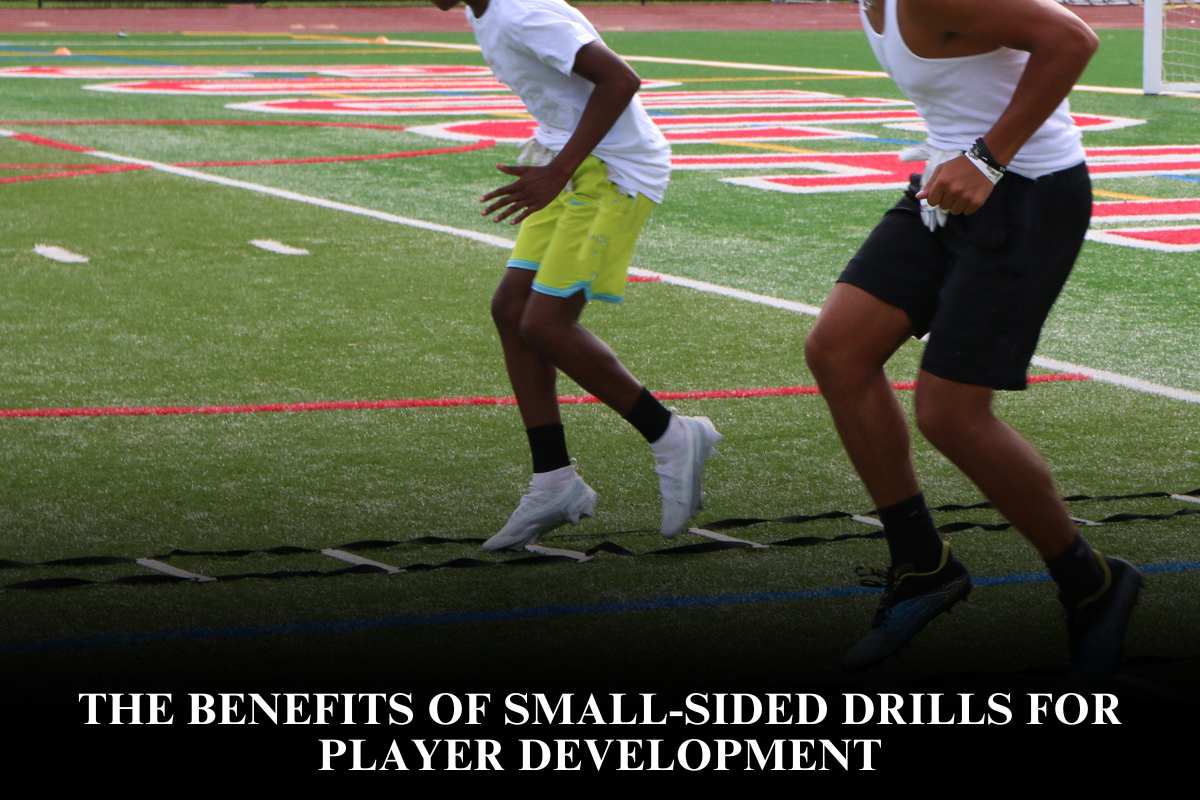
Ladders build rapid foot turnover: high knees through 10 rungs (20-30 seconds x 5 sets) for receivers, focusing ball-of-foot contact; Ickey Shuffle (side-step in-out) for backs to mimic cut lanes. NFL Flag drills add hops for explosiveness, improving coordination by 15-20% in youth per USA Football metrics—progress to one-foot patterns for advanced balance.
Cone Drills for Cuts and Transitions
5-10-5 pro agility shuttle: sprint 5 yards, touch cone, shuffle 10 yards opposite, backpedal 5—targets lateral quickness for route stems. Receivers run “Burst Glide Burst” (explode 5 yards, glide cut, re-accelerate) per Cooper Kupp; backs drill jump cuts planting outside foot without deceleration. 4-corner points with vocal cues enhance reaction, vital for NFL breaks.
Position-Specific Footwork
Wide Receivers
A-B-C progressions: A-step (press/release), B-step (rocker for stem), C-step (break/turn)—drills like Red Light Green Light build body control. Ladder to cone flows simulate stems, staying on toes for separation.
Running Backs
Power/open steps: 6-inch drop/crossover for inside zone, eyes on down blocks—Texas Swing for traffic vision. Jump cuts at full speed evade arm tackles.
Quarterbacks
3/5/7-step drops with “Pat and Go” throws; pocket slides evade rush while square base preps pass. Brady Drill hones escape with eyes downfield.
Speed and Strength Integration
Overspeed resisted runs (VertiMax bands) pair with wall leans for stride frequency; box drills (square cones) boost COD speed. Daily 20-40 dashes build linear power, per youth evals—combine with med ball slams for core stability.
Drills for Game Simulation
Routes on Air: WRs run stems to air throws for timing; half-line Big OK for backs in traffic. Snap-tuck to overspeed for all—mimic pressure with cones as defenders.
Progressions and Coaching Tips
Start slow for form (50% speed), accelerate reps; film for feedback. 3x/week, 20-30 min sessions yield gains—USA Football prioritizes technique over reps to avoid injury.
FAQs
Q. Why prioritize footwork over speed alone?
Elite COD separates pros; ladders/cones improve quickness 15-20% beyond raw sprinting.
Q. Best ladder drill for receivers?
Ickey Shuffle or high knees—builds precise stem foot turnover for breaks.
Q. How do backs train jump cuts?
Plant outside foot at full speed, no slowdown—cone flows per NFL Flag.
Q. QB drop footwork essentials?
3-step: rocker-drop-plant; eyes downfield, base square for throws.
Q. How often drill agility?
3x/week, 20 min; progress from ladders to game sims for transfer.