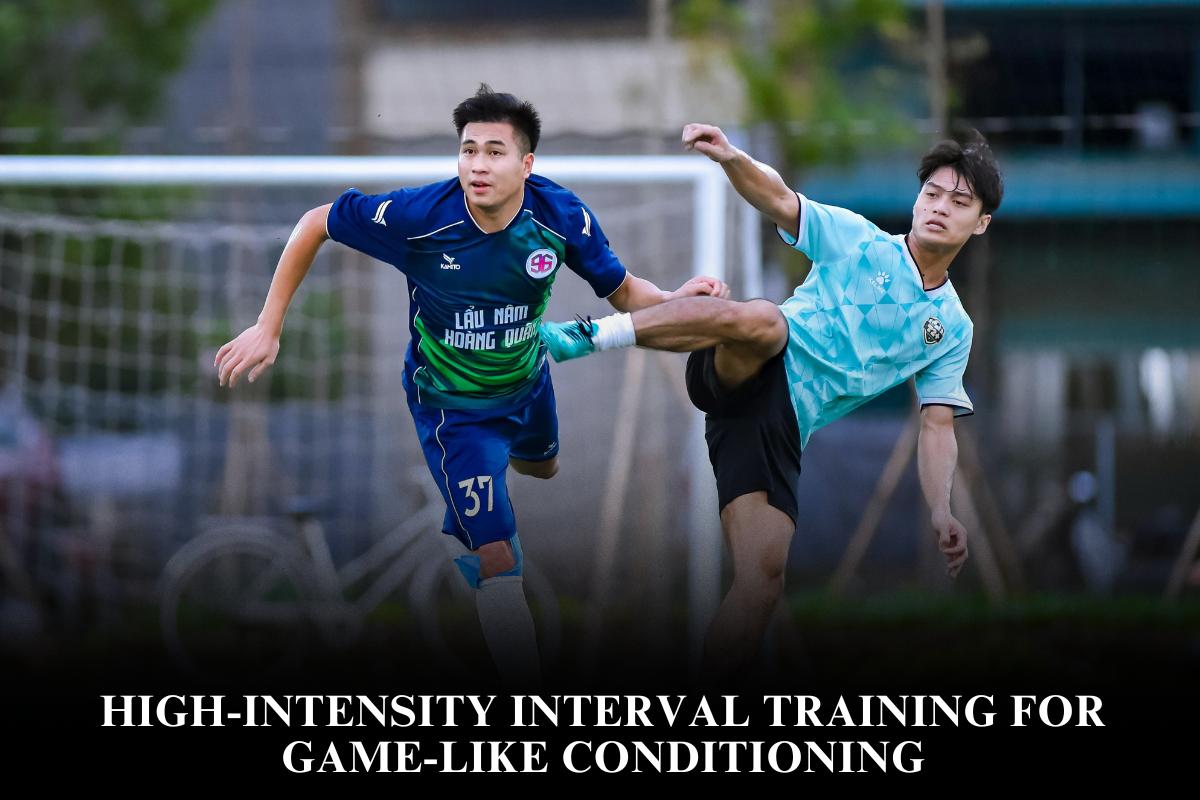
High-Intensity Interval Training (HIIT) replicates the explosive bursts and recoveries of team sports like soccer, basketball, and football, building game-like conditioning per NSCA and ACSM guidelines for U.S. athletes.
Protocols alternate near-max efforts (90-130% vVO2max) with active rest, boosting VO2max by 5-12%, sprint speed, and repeat sprint ability in 4-8 weeks. This time-efficient method outperforms steady-state cardio for in-season maintenance, minimizing injury while enhancing match performance.
Why HIIT Matches Sports Demands
Team sports demand 10-20% time at >90% VO2max via sprints, jumps, and direction changes, per NSCA analysis. HIIT accumulates high aerobic/anaerobic loads efficiently—long intervals (3-5 min at 95% MAS) mimic prolonged rallies, short (15-60s at 110-130%) replicate sprints. Meta-analyses confirm superior gains in peak power (+2.6%), economy, and thresholds vs. continuous training, especially added to skills work.
ACSM notes HIIT’s dose-response: higher volume yields greater VO2max, ideal for elite athletes where traditional runs risk overtraining.
Key HIIT Protocols for Conditioning
HIIT Long (Aerobic Endurance): 5-8x 3 min at 95% MAS (e.g., shuttle runs), recover 4-5 min at 50% or 2-3 min passive. Builds sustained high-output capacity for soccer halves.

HIIT Short (Anaerobic Power): 2-3x (8x 30s at 110% MAS, e.g., resisted sprints), recover 30s active or 15s passive. Targets repeat sprint ability (RSA), vital for basketball transitions.
Repeated Sprint Training (Max Power): 2-4x (6-10x 3-6s all-out, e.g., COD jumps), recover 15-30s. Maximizes glycolytic power for football bursts.
Integrate ball work: zig-zag dribbles into shots, per SIA Academy models.
Sample Soccer/Basketball Workouts (2-3x/Week)

Warm-up: 10 min dynamic + strides. Cool-down: foam roll.
Soccer HIIT (Pre-Season, 45 min):
| Set | Exercise | Work:Rest | Reps |
|---|---|---|---|
| 1 | Shuttle sprints (20m) | 30s:30s | 8×3 |
| 2 | Dribble + shot intervals | 3min:4min | 6x |
| 3 | Repeated COD sprints | 6s:20s | 10×2 |
Total: 20-30 min high effort, +5-10% Yo-Yo IR1 post-10 weeks.
Basketball HIIT (In-Season, 30 min):
| Set | Exercise | Work:Rest | Reps |
|---|---|---|---|
| 1 | Full-court sprints | 15s:45s | 8×2 |
| 2 | Defensive slides + rebound | 45s:90s | 6x |
| 3 | Jump shot bursts | 20s:40s | 10x |
Yields RSA improvements matching game demands.
Progression and Safety Guidelines
NSCA recommends 2-3 sessions/week, periodized: pre-season volume up, in-season 1-2x maintenance. Monitor RPE (8-9/10), HR recovery (>60 bpm drop in 1 min). Base-build 3 months moderate before HIIT; youth/adults progress 10% weekly. Contraindications: uncontrolled cardio issues—physician clearance per ACSM.
Injury risk low vs. volume training; active recovery preserves form.
Performance Outcomes and Evidence
Meta-analyses: HIIT boosts time-trial (+4.9%), sprint (+5.5%), VO2max (+2.6-12.6%) in elites, outperforming controls. Soccer: +Yo-Yo distance, competition-phase peaks. Racket sports: strength/speed/endurance via glycolytic mimicry. HIIT short/long maximize >90% VO2max time efficiently.
FAQs
1. How often for team sports?
2-3x/week; pre-season volume, in-season maintenance per NSCA.
2. HIIT vs. steady cardio?
Superior VO2max/speed gains, less time/injury risk.
3. Safe for high school athletes?
Yes, with base-building; monitor RPE/HR recovery.
4. Best for soccer/basketball?
Short HIIT for RSA, long for endurance—game-specific.
5. Measurable gains timeline?
4-6 weeks: +5-10% VO2max/RSA per studies.