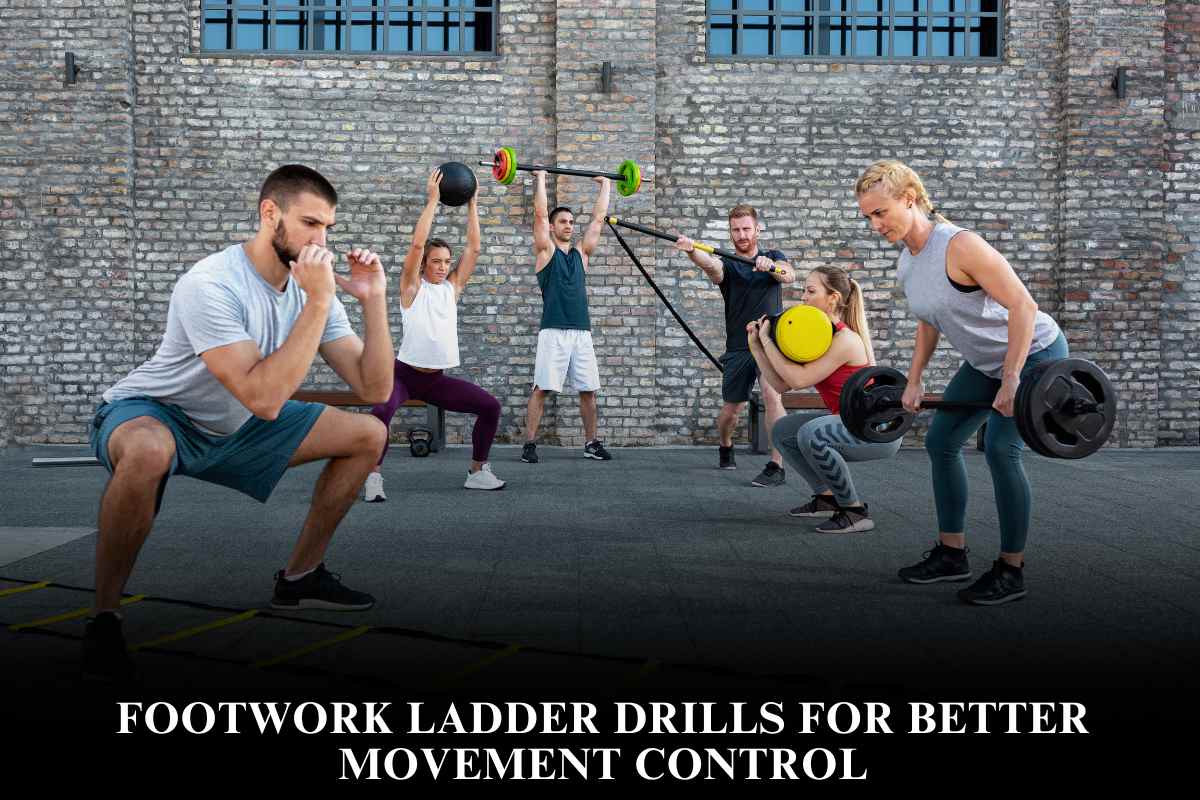
Footwork ladder drills, widely used in USA sports like NFL football, NBA basketball, and MLS soccer, enhance speed, agility, and precision. These exercises build neuromuscular efficiency for quick directional changes and controlled movements. Athletes from youth leagues to pros incorporate them for superior performance.
Benefits of Ladder Drills
Agility ladder training improves speed by conditioning muscles for rapid leg turnover, as seen in high-knee runs that boost acceleration. It sharpens agility through drills requiring sudden stops, pivots, and direction shifts, vital for sports like American football where quickness prevents tackles. Coordination and balance strengthen via precise foot placement, reducing injury risk by fortifying joints, ligaments, and core stability.

Cardiovascular endurance rises from high-intensity intervals, burning calories while elevating heart rate to meet CDC’s 150-minute weekly cardio recommendation. Cognitive gains include faster reaction times and decision-making, as the brain-muscle connection hones reflexes under pressure. In USA training programs, these drills enhance overall athleticism for sports demanding explosive movement control.
Essential Equipment and Setup
A standard agility ladder, available from USA brands like SMAI or Gopher Sport, features 10-20 rungs spaced 15-18 inches apart and measures 15-25 feet long. Lay it flat on grass, turf, gym floors, or concrete—secure it to prevent shifting during drills. Beginners start with basic models costing under $30, while pros use durable, portable versions for travel.
Wear athletic shoes with good traction, and clear the area of obstacles. Warm up with dynamic stretches like leg swings for 5-10 minutes to prep muscles and joints. Perform drills 2-4 times weekly, progressing from slow to explosive speeds.
Beginner Drills for Footwork Foundations

One-Foot Per Square: Step one foot into each rung, alternating quickly—right in first square, left in second, and continue. Builds basic speed and rhythm; do 4-6 passes per leg.
High Knees: Drive knees toward chest, placing one foot per square. Enhances hip flexor strength and foot speed; add lateral variation for side-to-side control.
In-Out Drill: Step both feet into a square, then out to the sides before advancing. Improves coordination; repeat 5-8 times, focusing on light, rapid steps. These suit youth athletes in USA school programs, fostering control without overload.
Intermediate Drills for Agility Enhancement
Icky Shuffle: Step right foot in first square, left out left side, right across behind, then left in next square. Mimics cutting in basketball; perform forward and backward.
Lateral Shuffle: Face sideways, step both feet in-out per square moving laterally. Boosts hip mobility for soccer defenders; switch directions after each set.
Two-In Hop: Hop both feet into each square rapidly. Strengthens ankles and calves; do 3-5 sets for better balance during NFL combine prep. Progress by adding arm pumps for full-body sync.
Advanced Drills for Elite Movement Control
Carioca: Grapevine step—outside foot in square, inside cross behind, outside over, then in. Perfect for basketball crossovers; lateral execution hones rotational power.
Heisman Drill: Run forward with high knees, one foot in, other out wide per square. Builds explosive power for football bursts; reverse for deceleration training.
Icky Shuffle with Rotation: Add 180-degree turns mid-ladder. Challenges cognitive processing for game-like scenarios in USA pro leagues. Elite athletes chain 3-5 drills for 20-30 minute sessions.
Sample USA Training Routine
Warm-up: 5 minutes jogging, dynamic stretches.
Circuit (3-4 rounds, 20-30 seconds per drill, 15-second rest):
- Beginner: One-Foot, High Knees.
- Intermediate: Icky Shuffle, Lateral Shuffle.
- Advanced: Carioca, Heisman.
Cool down: Static stretches. NFL and NBA programs integrate this 2-3x weekly, tracking progress via timed runs. Adjust for fitness level—beginners slow pace, advanced add resistance bands.
Safety and Progression Tips
Start slow to master form, preventing trips; use a spotter initially. Progress by increasing speed, reps, or complexity every 1-2 weeks—track with apps or timers. Hydrate, rest 48 hours between sessions to avoid overuse injuries like shin splints.
Consult trainers for personalization, especially in youth USA sports where form trumps speed. Combine with strength training for optimal control.
FAQs
1. How often should beginners do ladder drills?
Start with 2-3 sessions weekly, 10-15 minutes each, building to 20-30 minutes as control improves. Focus on quality over quantity.
2. Can ladder drills help with weight loss?
Yes, as HIIT-style cardio, they burn 10-15 calories per minute while boosting metabolism via EPOC. Pair with diet for best results.
3. Are these drills suitable for kids in USA youth sports?
Absolutely—simplify for ages 8+, emphasizing fun and form to build fundamentals for soccer, football, or basketball.
4. What if I don’t have an agility ladder?
Mark squares with chalk, tape, or cones on the ground—same benefits for home or park training.
5. How long until I see movement control improvements?
Noticeable gains in 2-4 weeks with consistency; full athletic transfer in 6-8 weeks per sports science studies.