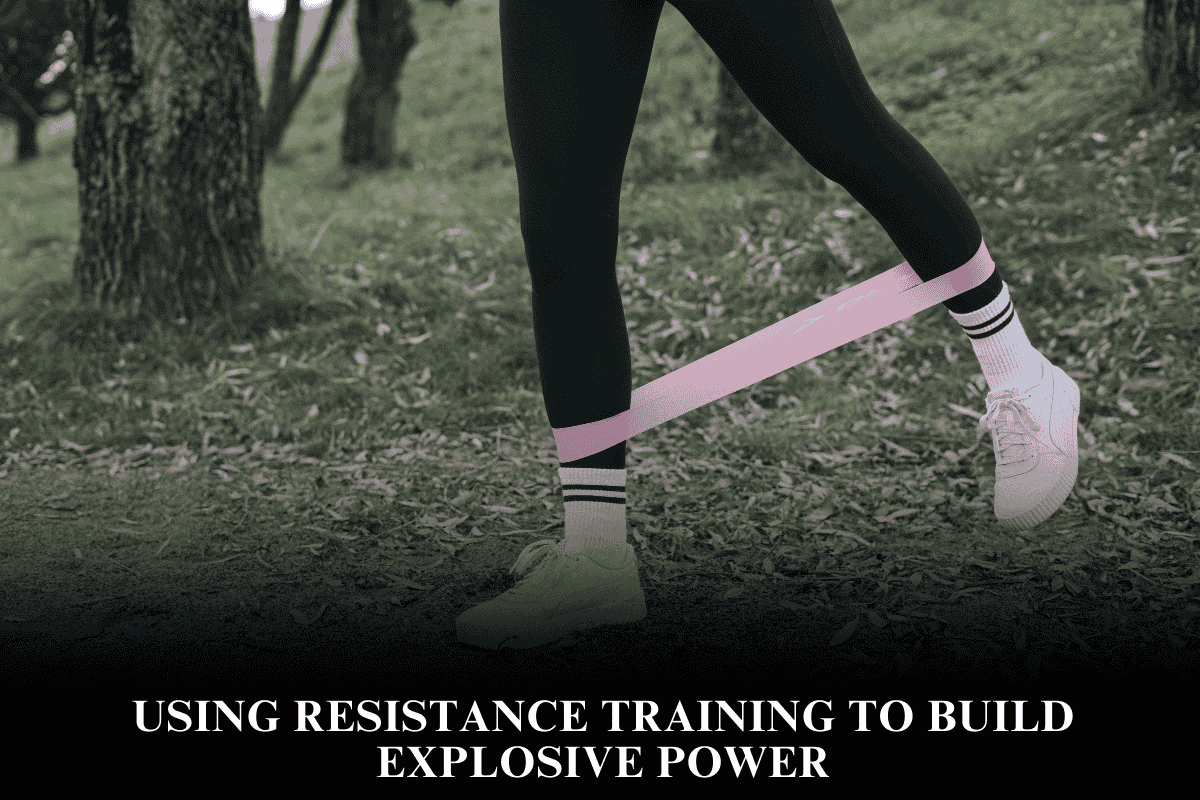
Resistance training builds explosive power by emphasizing rapid force production through high-velocity lifts and ballistic movements. This approach enhances athletic performance in sports requiring quick bursts, like sprinting or jumping. Methods such as plyometrics, complex training, and French Contrast integrate resistance to target fast-twitch fibers effectively.
Science of Explosive Power
Explosive power combines strength and speed, following the force-velocity curve where optimal power occurs at intermediate loads. Traditional heavy resistance training boosts maximal strength but limits velocity, while explosive variants like ballistic lifts maximize rate of force development (RFD). Plyometrics exploit the stretch-shortening cycle (SSC), using eccentric loading followed by rapid concentric action to increase power output by 10-15%.

Neural adaptations drive gains, including better motor unit recruitment and reduced antagonist co-contraction for efficient force transmission. Studies show explosive resistance outperforms standard strength training for RFD, vital for daily tasks and sports.
Key Exercises and Techniques
Effective exercises focus on compound movements performed at high speed with moderate loads (30-60% of 1RM).
- Power Cleans and Snatches: Olympic lifts develop triple extension for full-body power.
- Box Jumps and Squat Jumps: Plyometric staples enhance lower-body explosiveness.
- Medicine Ball Slams/Throws: Build core and upper-body power dynamically.
- Kettlebell Swings and Push Press: Hip-driven ballistics for posterior chain strength.
- Plyometric Push-Ups: Upper-body SSC for reactive strength.
French Contrast Method sequences heavy compound (e.g., back squat), plyometric (e.g., tuck jumps), weighted explosive (e.g., dumbbell jumps), and overspeed (e.g., band-assisted jumps) in one set for superior gains.
Sample Training Program

Train 2-3 days weekly with 48-72 hours recovery. Warm up with dynamic mobility, then perform 3-5 sets of 3-6 reps per exercise at maximal intent speed. Progress by adding 5-10% load biweekly.
| Day | Exercise Sequence (French Contrast Example) | Sets x Reps | Rest |
|---|---|---|---|
| Lower Body | Back Squat (Heavy), High Tuck Jumps, DB Squat Jumps, Band Overspeed Jumps | 4×4, 8, 6, 6 | 2-3 min |
| Upper Body | Bench Press (Ballistic), Plyo Push-Ups, Med Ball Throws | 4×4, 8, 8 | 2 min |
| Full Body | Deadlift to Box Jump, Kettlebell Swings, Lateral Bounds | 3×5, 10, 10 | 90 sec |
Pair with sprint drills for transfer. Beginners start with bodyweight; advanced use 40-80% loads.
Benefits and Considerations
Explosive resistance training improves speed, agility, and injury resilience via enhanced RFD and coordination. It supports hypertrophy similarly to traditional methods while prioritizing power over size. Older adults gain functional mobility, like faster walking.

Prioritize form to avoid injury; consult professionals if new to training. Combine with nutrition for recovery.
FAQ
Q. What is the difference between strength and power training?
Power training emphasizes velocity with lighter loads, unlike heavy strength work focused on maximal force.
Q. How often should beginners train for explosive power?
2-3 sessions weekly, with rest days to allow neural recovery.
Q. Can explosive training help non-athletes?
Yes, it boosts daily function, balance, and fall prevention.
Q. What equipment do I need?
Minimal: boxes, medicine balls, kettlebells; bodyweight works initially.
Q. How long until I see results?
6-8 weeks for measurable power gains with consistent training.